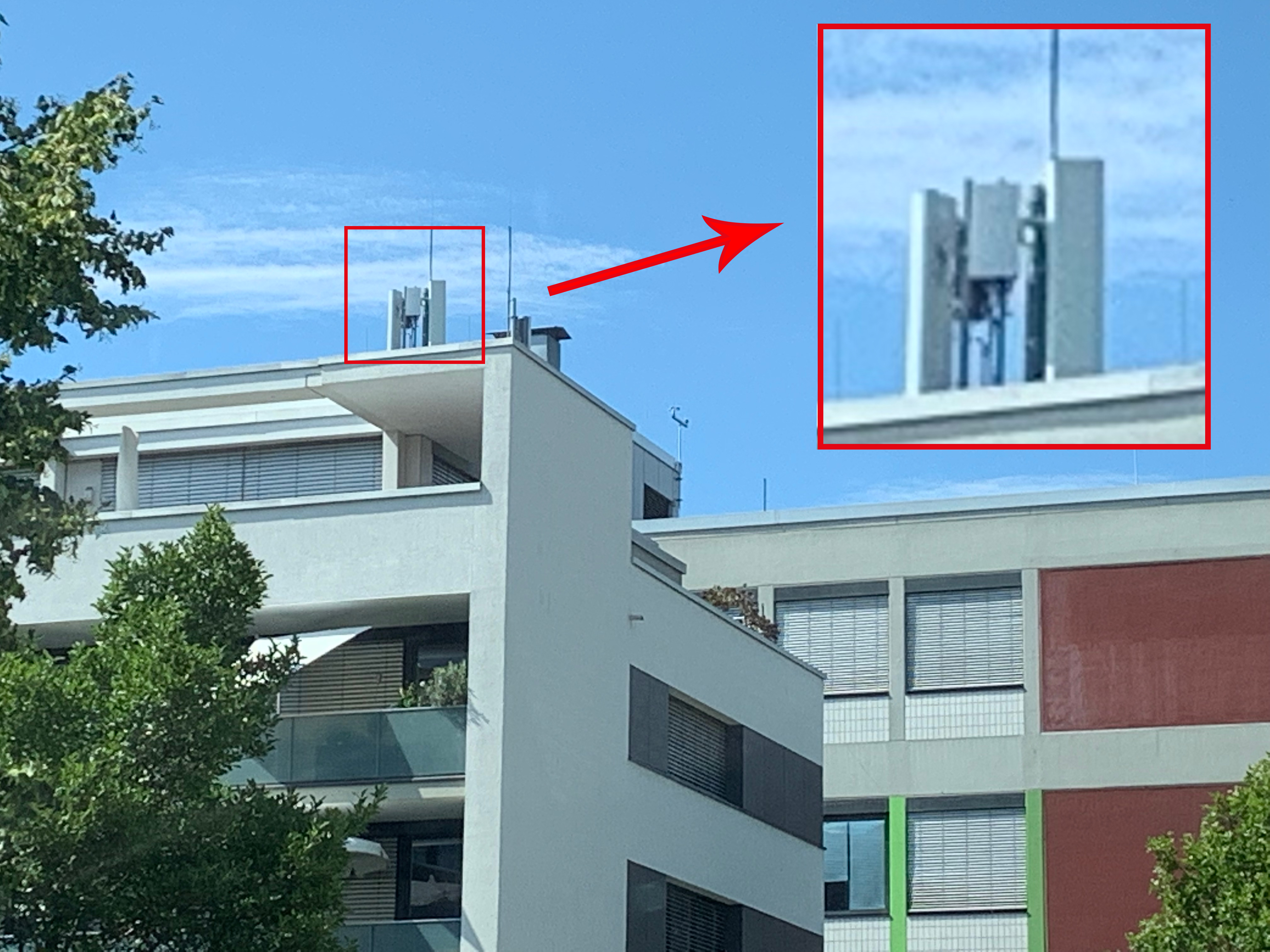
Standards Overview
4G LTE (Long Term Evolution) was standardized by 3GPP starting with Release 8 (2008) and is currently deployed in Germany as LTE-Advanced (Release 10+) and LTE-Advanced Pro (Release 13+). It uses OFDMA (Orthogonal Frequency Division Multiple Access) in the downlink and SC-FDMA in the uplink.
5G NR (New Radio) was standardized in 3GPP Release 15 (2018) and subsequent releases. Germany's 5G deployments are primarily Release 15 and 16. NR uses OFDM in both uplink and downlink, with more flexible numerology (subcarrier spacing) that can be adapted to different frequency ranges and use cases.
Spectrum and Frequency Allocation in Germany
The spectrum holdings of German MNOs differ significantly between 4G and 5G. 4G LTE is deployed across a wide range of bands from 700 MHz to 2600 MHz. 5G NR is primarily concentrated at two frequency ranges:
- Sub-6 GHz low bands (700 MHz, 2100 MHz): used for 5G NR with wide-area coverage, though with lower peak speeds than mid-band
- Mid-band 3.4–3.8 GHz (n78): the primary 5G band providing the bulk of 5G capacity in Germany, auctioned in June 2019
Germany has not yet deployed millimeter wave 5G (above 24 GHz) at commercial scale. The Bundesnetzagentur has reserved the 26 GHz band for future use, primarily anticipated for industrial campus networks and potentially dense urban hotspot deployments.
| Characteristic | 4G LTE | 5G NR |
|---|---|---|
| Primary frequency range | 700 MHz – 2.6 GHz | 700 MHz, 2.1 GHz, 3.5 GHz |
| Max channel bandwidth | 20 MHz per band | Up to 100 MHz (3.5 GHz) |
| Carrier aggregation | Up to 5 carriers (LTE-A Pro) | Up to 16 component carriers (NR) |
| Duplex mode | FDD (most bands), TDD (2.6 GHz) | FDD (700/2100), TDD (3.5 GHz) |
| MIMO | Up to 8×8 DL, 4×4 UL | Up to 64×64 (Massive MIMO) DL |
Performance Characteristics
Peak and Typical Throughput
Theoretical peak data rates differ substantially between the standards, though real-world performance is always lower due to network load, distance from the base station, and the number of simultaneous users.
| Metric | 4G LTE-Advanced | 5G NR (3.5 GHz) |
|---|---|---|
| Peak downlink (theoretical) | ~1 Gbit/s (3CA, 4×4 MIMO) | Up to 20 Gbit/s (theoretical) |
| Typical downlink (Germany) | 30–150 Mbit/s | 100–600 Mbit/s |
| Peak uplink (theoretical) | ~200 Mbit/s | Up to 10 Gbit/s (theoretical) |
| Typical uplink (Germany) | 10–50 Mbit/s | 30–150 Mbit/s |
| Spectral efficiency | Up to 30 bit/s/Hz (DL) | Up to 30 bit/s/Hz (DL), improved per-cell capacity |
Latency
Latency in mobile networks is measured as round-trip time (RTT) from the device to the packet data network (PDN) gateway, or more commonly, as end-to-end ping time to a server.
- 4G LTE typical latency: 20–50 ms (user-plane RTT to PDN gateway specification is 10 ms; end-to-end including internet routing is typically higher)
- 5G NR NSA latency: 15–30 ms (limited by the LTE anchor layer in Non-Standalone mode)
- 5G NR SA latency target: as low as 1 ms (user-plane specification); typically 10–20 ms end-to-end in deployed networks
The latency improvement in 5G NR Standalone (SA) mode is significant for applications such as online gaming, real-time video conferencing, and industrial control systems.
Network Architecture Differences
4G LTE uses the Evolved Packet Core (EPC) architecture with well-defined network functions: the Mobility Management Entity (MME), Serving Gateway (SGW), and PDN Gateway (PGW). The radio access network (RAN) uses the E-UTRAN specification.
5G NR introduces a Service-Based Architecture (SBA) in the 5G Core (5GC), where network functions communicate via APIs. Key functions include the AMF (Access and Mobility Management Function), SMF (Session Management Function), and UPF (User Plane Function). The RAN uses the NG-RAN specification.
This architectural shift enables Network Slicing — the ability to create multiple virtual networks on shared physical infrastructure, each with guaranteed quality parameters. Network slicing is relevant for enterprise and industrial use cases but not directly visible to consumer end users.
5G Coverage Status in Germany
As of 2025, all three German MNOs report 5G population coverage above 90% for the 5G NR signal (measured as the ability to detect a 5G signal from a given address). However, this headline figure includes 5G coverage provided by the 700 MHz and 2100 MHz bands using Dynamic Spectrum Sharing (DSS) — technology that shares spectrum between 4G LTE and 5G NR simultaneously.
DSS-based 5G typically delivers speeds only marginally better than LTE, as the available bandwidth is shared between the two technologies. True 5G performance improvements require dedicated mid-band (3.5 GHz) capacity, which is more concentrated in urban areas.
NSA vs SA Mode
German 5G networks were initially deployed in Non-Standalone (NSA) mode (3GPP Option 3x). In NSA, 5G NR is anchored to an existing LTE connection — the control plane runs over LTE, while data may flow over both LTE and NR simultaneously. This allows rapid rollout leveraging existing EPC infrastructure.
Standalone (SA) mode connects the 5G NR radio directly to the 5G Core, unlocking full 5G capabilities including ultra-low latency and network slicing. Deutsche Telekom, Vodafone, and O2 have progressively expanded SA mode in Germany since 2022–2023, though NSA remains the dominant mode for consumer devices as of 2025.
Frequently Asked Questions
Do I need a 5G phone to use 5G in Germany?
Yes. 5G NR requires a device with a compatible 5G modem. Older 4G-only devices will not connect to 5G cells. Devices must also support the specific 5G bands used by the operator — notably Band n78 (3.5 GHz) for mid-band 5G.
Is 4G being phased out in Germany?
There are no confirmed plans to switch off 4G LTE networks in Germany in the near term. The Bundesnetzagentur's current coverage obligations still reference 4G performance targets. 4G will coexist with 5G for the foreseeable future, with gradual spectrum refarming from older technologies to 5G as traffic patterns evolve.
What is Dynamic Spectrum Sharing (DSS)?
DSS is a technique that allows a single frequency band to carry both LTE and 5G NR traffic simultaneously, with the split adjusted dynamically based on demand. It enables operators to offer 5G coverage without needing additional spectrum, but it results in lower peak 5G speeds than a dedicated 5G channel provides.